

In Los Angeles County, 13.9% of the population lived in poverty in 2023. With a population of over 9.7 million, there are over 1.3 million persons who are considered poor.
Community Statistics
Poverty
In 2024, California continued to have one of the highest poverty rates in the nation, with approximately 17.7% of residents (about 7 million people) unable to meet basic needs based on the Supplemental Poverty Measure (SPM). Like the statewide trend, 19.9% of Los Angeles County residents lived in poverty (based on CPM, which accounts for the county’s high cost of living). With an estimated population of approximately 9.76 million in 2024, over 1.9 million people are considered poor.
Additionally, statistics show that roughly 1 in 3.5 households have jobs but still struggle to cover basic needs. Inadequate funds for basic needs mean that the average worker cannot save money and any sudden expense or loss of income results in food and housing insecurity. Each year, hunger and homelessness affect the lives of millions of Americans.
Hunger
Millions of individuals and families across the United States face hunger and food insecurity every day. Nationally, food insecurity worsened in recent years as pandemic-era support ended and inflation drove up food and housing costs.
The U.S. Department of Agriculture report released on September 4, 2024, revealed that food insecurity in the United States increased by 6% overall in 2023, with an estimated 47.4 million people—nearly 1 in 7 Americans—lived in food-insecure households in 2023, including nearly 14 million children (1 in 5), marking the highest levels since 2014.
While food insecurity in Los Angeles County fell 5% last year, 25% of households (about 832,000 households) still struggle to put food on the table, amid cuts to food programs and lingering high costs. (USCDornsife, Dec. 2024)
Food banks across the country reflect the same trends seen in Los Angeles County, with rising need driven by high living costs, food price inflation, and the rollback of COVID-19 emergency programs such as SNAP and enhanced CalFresh benefits.
Overall, economic hardship and the lingering effects of the COVID-19 pandemic have exacerbated food insecurity nationwide, with Los Angeles County experiencing rates consistently well above the national average.
Homelessness
According to the Los Angeles Homeless Services Authority (LAHSA), there were an estimated 72,308 homeless persons in the Greater Los Angeles area as of the 2025 count — including 43,699 in the City of Los Angeles.
Of the total homeless population, approximately 65% were unsheltered — residing in places not meant for human habitation, such as cars, parks, and sidewalks — while around 35% were sheltered, living in emergency shelters, transitional housing, or supportive housing.
This marks a 4% drop across the county and a 3.4% decrease in the city compared to 2024 — the second consecutive year homelessness has declined in Los Angeles. In 2024 alone, nearly 28,000 people were placed into permanent housing countywide, the highest number on record. Targeted programs aimed at the most vulnerable have led to a nearly 22% drop in chronic homelessness since 2023, with approximately 6,000 fewer people classified as chronically homeless.
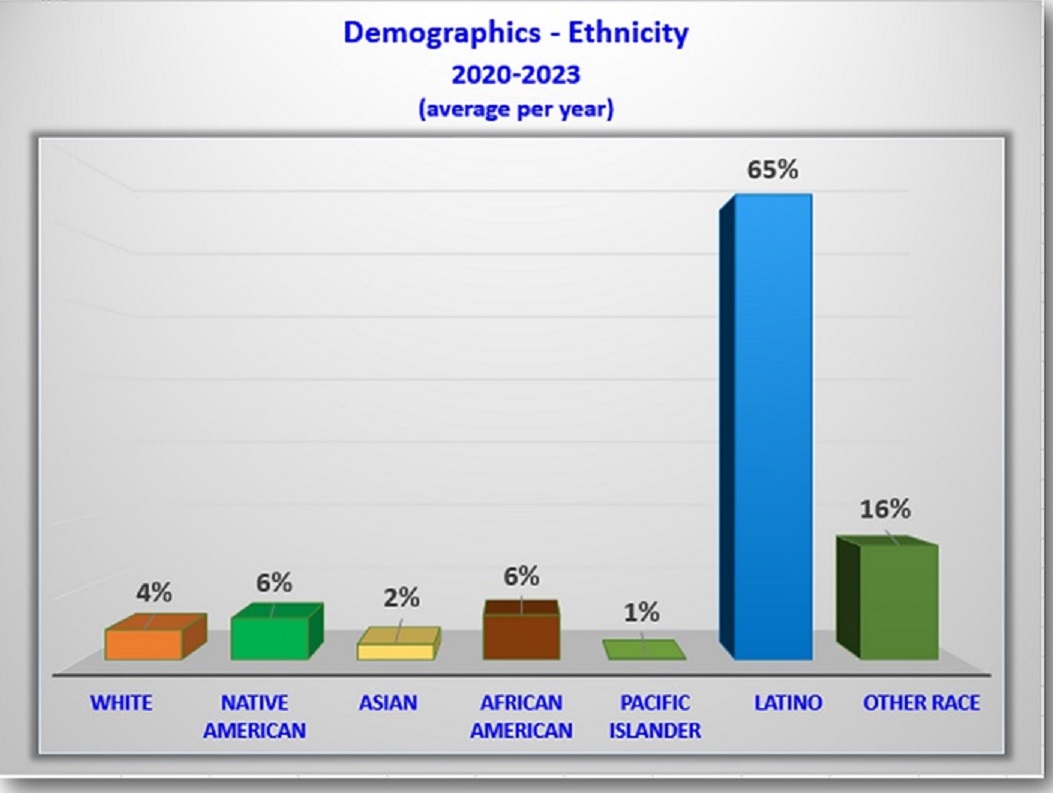
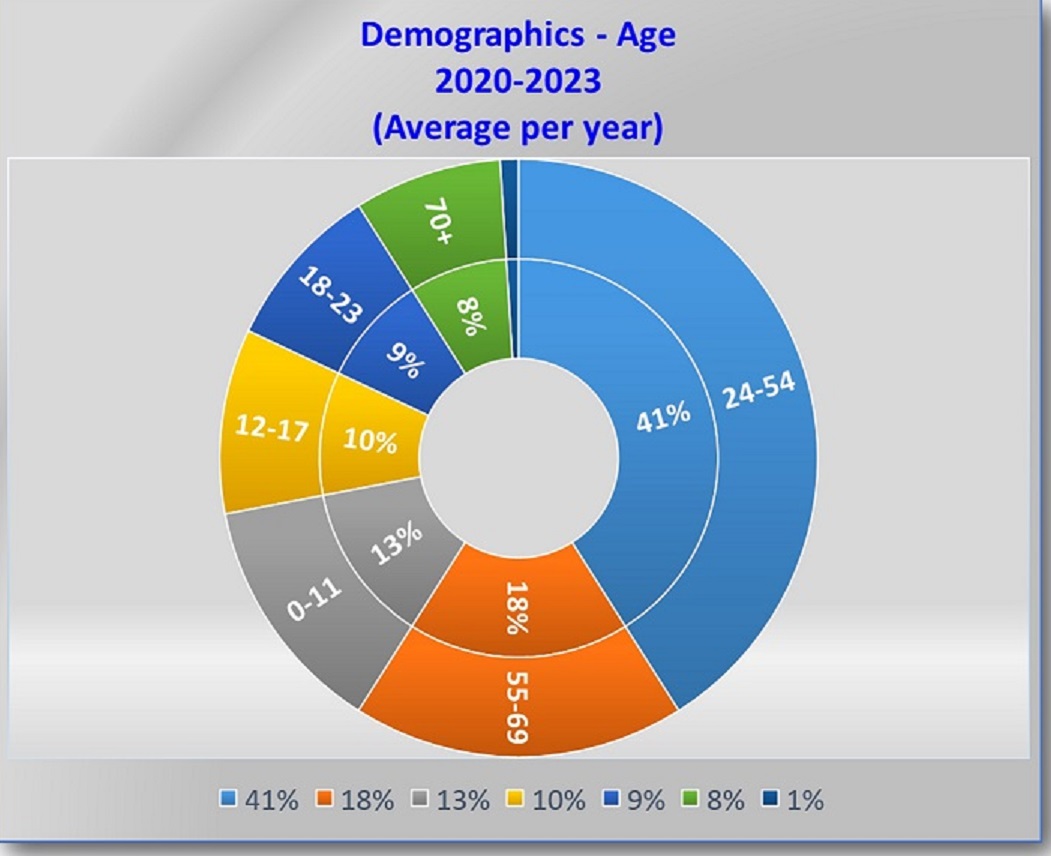
Demographics of Population Served
by Catholic Charities of Los Angeles, Inc.



©2026 All Rights Reserved. Catholic Charities of Los Angeles, Inc.
Catholic Charities of Los Angeles, Inc. is a 501(c)(3) nonprofit, public benefit corporation accredited by the Council on Accreditation.